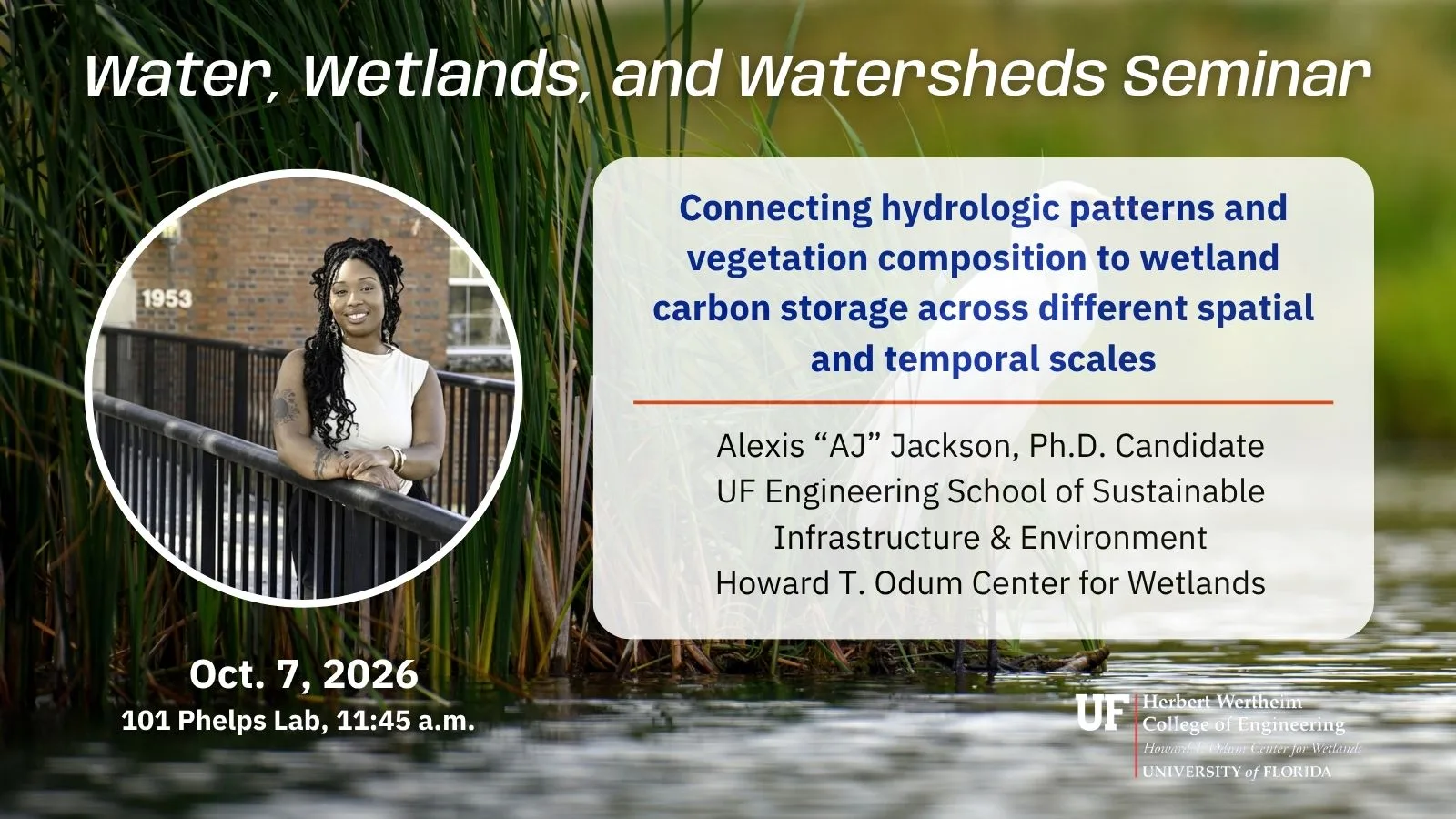
Alexis “AJ” Jackson, Doctoral Candidate, UF Engineering School of Sustainable Infrastructure & Environment, Howard T. Odum Center for Wetlands
Join us for the livestream Oct. 7, 11:45 a.m., ET: UF Howard T. Odum Center for Wetlands – YouTube
Abstract
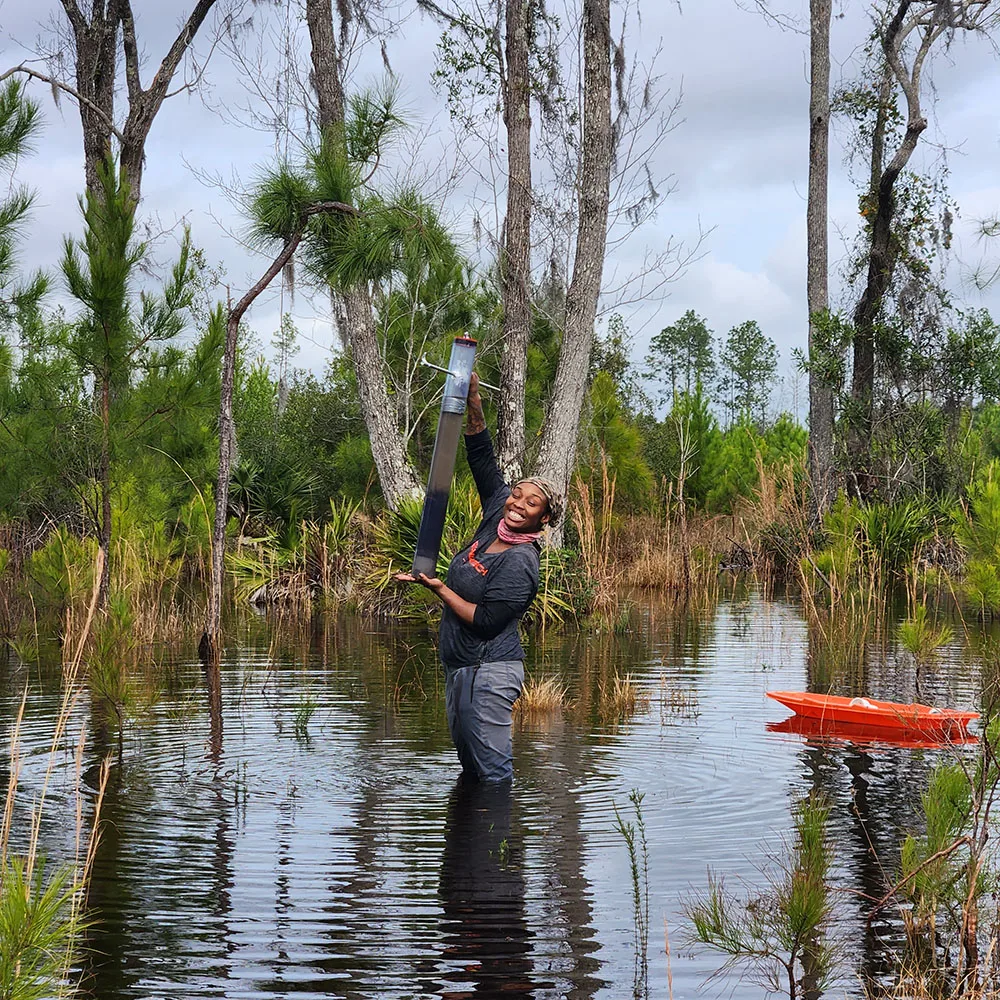
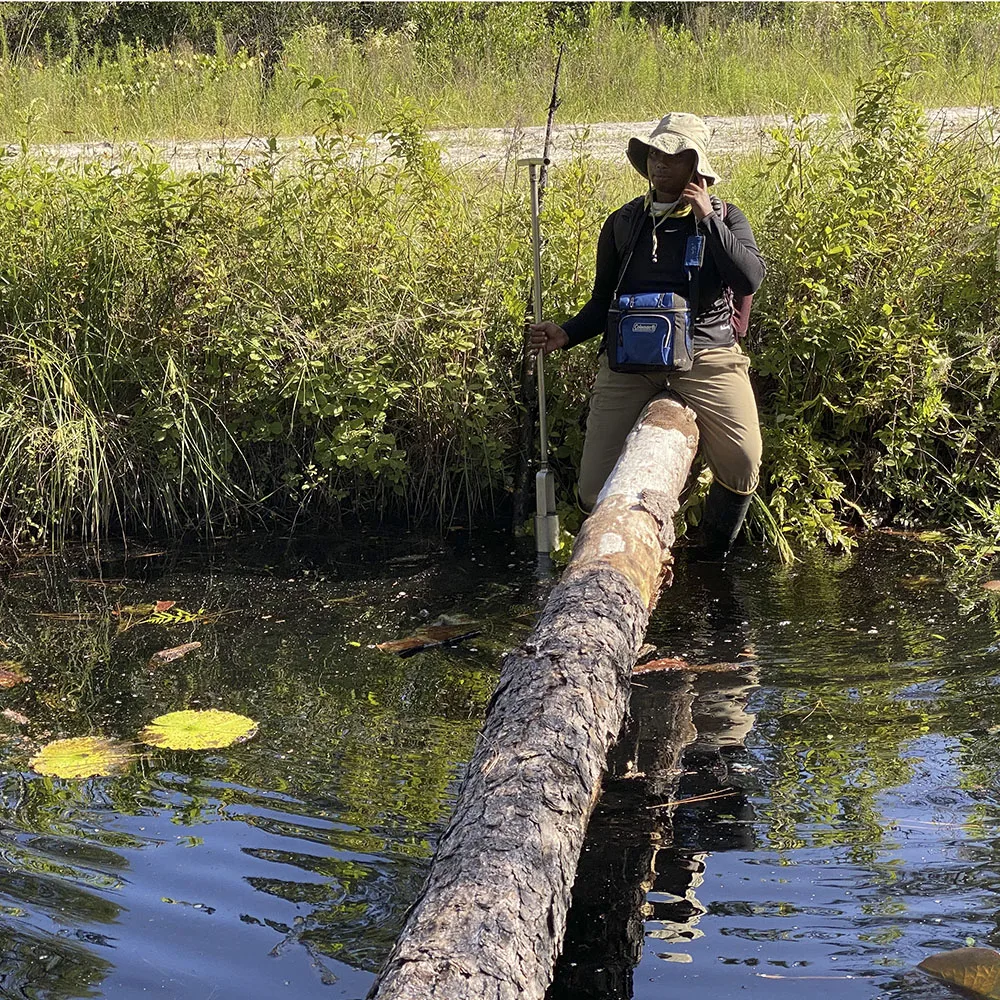
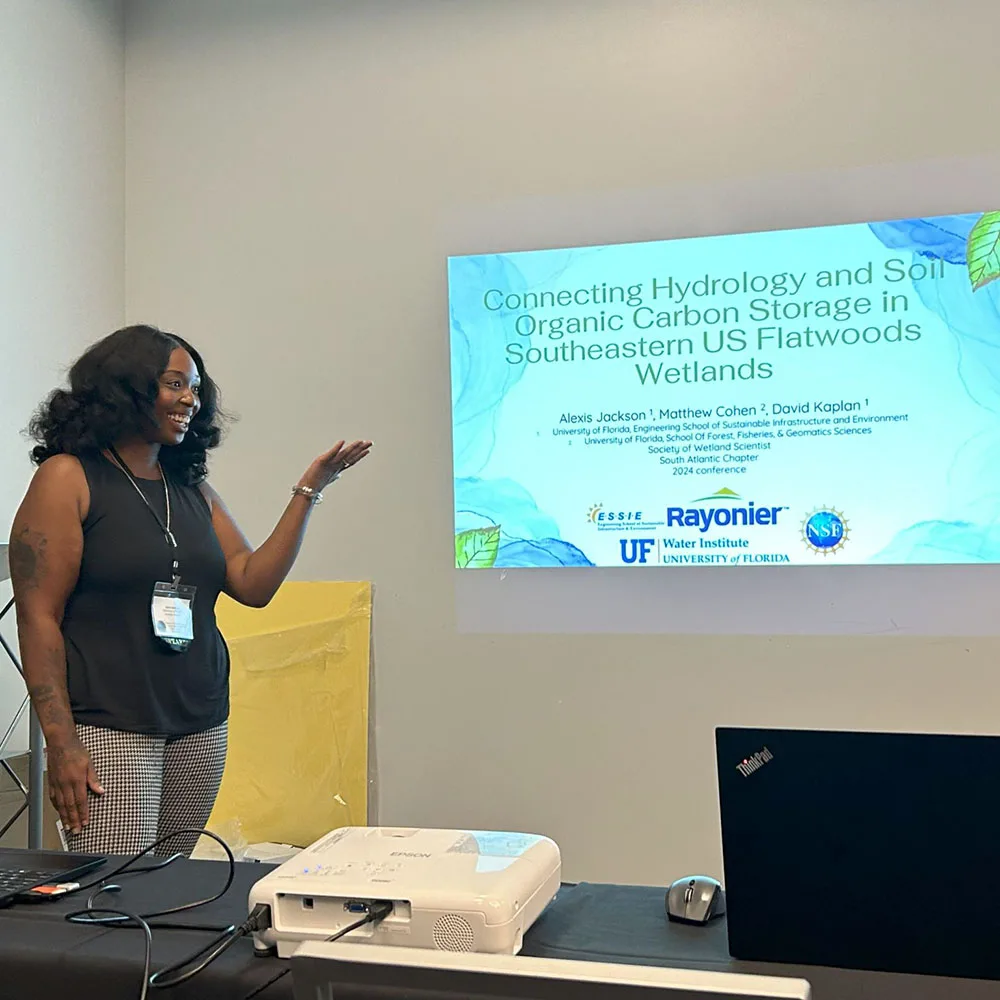
Wetlands are among the most important ecosystems for long-term carbon storage, yet the environmental controls on soil organic carbon (SOC) distribution vary across spatial scales, wetland types, and soil depths. This research investigates the drivers of SOC storage across wetlands using a combination of national-scale datasets, field measurements, and modeling approaches. First, we examined SOC patterns across wetlands in the conterminous United States using the National Wetland Condition Assessment (NWCA) dataset and machine learning models. Random forest analyses identified soil depth, climate variables, and soil properties as the most influential predictors of SOC across wetlands, with climate and geographic gradients representing broad-scale environmental controls. However, the models exhibited relatively low predictive performance, suggesting that additional environmental variables and finer-scale hydrologic information may be needed to better explain SOC variability on a national scale. To understand finer-scale controls, we used field measurements along upland-to-deep transects to evaluate how hydrologic gradients and vegetation patterns influence SOC distribution within north-central Florida depressional wetlands. Preliminary results indicate that SOC concentrations decrease with depth but vary substantially across landscape position and vegetation type, with wetter positions generally containing higher SOC in surface soils but exhibiting greater variability. Finally, modeling analyses suggest that hydrologic conditions and soil depth influence patterns in SOC storage and accumulation, while site-level differences contribute substantially to variability in deeper soils. Together, these results demonstrate that SOC storage in wetlands is governed by interacting processes operating across spatial and temporal scales, where broad climatic gradients shape regional patterns, but local hydrologic conditions and landscape position control SOC variability within wetlands. These findings improve our understanding of wetland carbon dynamics and provide a framework for predicting SOC distribution under changing environmental conditions and management practices.
Bio
Alexis Jackson is a Ph.D. candidate in Environmental Engineering Sciences at the University of Florida and an NSF Graduate Research Fellow. Her research focuses on understanding how hydrology, vegetation, and climate influence soil organic carbon storage in wetlands across multiple spatial scales. Through field studies, remote sensing, and machine learning, she aims to improve predictions of wetland carbon dynamics and inform ecosystem management and restoration. Beyond her research, Alexis is actively involved in science outreach and student leadership through the Society of Wetland Scientists and previously served as a Water Institute Ambassador at the University of Florida.